
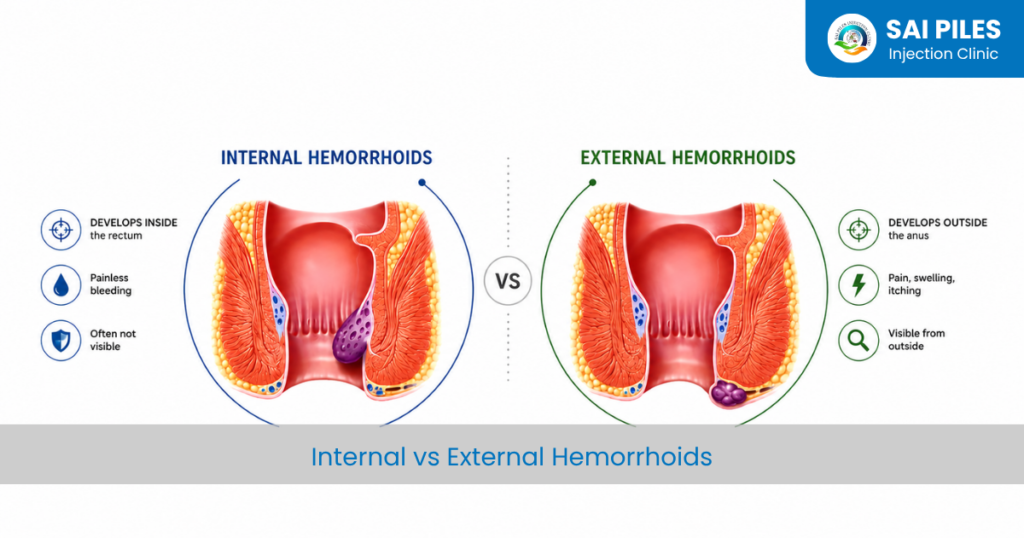
Piles are one of the most common anorectal conditions affecting millions of people worldwide. Despite being so common, many individuals hesitate to seek treatment because they feel embarrassed or are unsure whether they have internal or external hemorrhoids.
Knowing the difference between these two types is important because their symptoms, severity, and treatment options are not the same. Understanding your condition early can help you receive the right treatment before complications develop.
In this guide, you’ll learn the difference between internal and external hemorrhoids, their symptoms, common causes, available treatment options, and when it’s time to consult a specialist.
What Are Hemorrhoids?
Hemorrhoids are swollen veins that develop in or around the rectum and anus. They are similar to varicose veins and usually occur when excessive pressure is placed on the veins in the lower rectum.
Although hemorrhoids are generally not dangerous, they can cause pain, bleeding, itching, swelling, and discomfort that interferes with everyday activities and lowers your quality of life.
Hemorrhoids are broadly classified into two main types:
- Internal Hemorrhoids – Develop inside the anus.
- External Hemorrhoids – Develop under the skin around the anus.
Although both conditions involve swollen veins, they differ significantly in their location, symptoms, severity, and treatment approach.
Internal vs External Hemorrhoids: Quick Comparison
The table below highlights the major differences between internal and external hemorrhoids.
| Feature | Internal Hemorrhoids | External Hemorrhoids |
|---|---|---|
| Location | Inside the rectum | Outside the anus |
| Pain | Usually painless | Often painful |
| Bleeding | Common | Less common |
| Visibility | Not visible | Visible lump |
| Itching | Occasional | Very common |
| Treatment | Injection therapy, lifestyle changes | Injection Therapy, lifestyle changes |
Recognizing these differences can help you understand your symptoms and seek appropriate medical care without unnecessary delay. Injection therapy is so advance that it can be used for treatment of all grade hemorrhoids.
Internal Hemorrhoids
Internal hemorrhoids develop inside the rectum where there are very few pain-sensitive nerves. Because of this, they often remain unnoticed until symptoms such as rectal bleeding or prolapse begin to appear.
Many patients only discover they have internal hemorrhoids after noticing blood during bowel movements or following a medical examination.
Common Symptoms of Internal Hemorrhoids
The symptoms depend on the severity and grade of the hemorrhoids. Early-stage hemorrhoids may cause very few symptoms, while advanced cases become increasingly noticeable.
Common symptoms include:
- Bright red bleeding during bowel movements.
- Blood on toilet paper or in the toilet bowl.
- A feeling of incomplete bowel emptying.
- Mild discomfort or pressure in the rectum.
- Mucus discharge.
- Prolapse in advanced stages.
Unlike external hemorrhoids, pain is usually minimal unless the hemorrhoid prolapses or becomes irritated.
Grades of Internal Hemorrhoids
Doctors classify internal hemorrhoids into four grades based on how far the condition has progressed.
- Grade I: Small swollen veins that remain inside the rectum. Bleeding may occur, but there is no prolapse.
- Grade II: The hemorrhoid comes out during bowel movements but returns inside on its own.
- Grade III: The hemorrhoid prolapses during bowel movements and must be pushed back manually.
- Grade IV: The hemorrhoid remains outside permanently and usually requires advanced treatment.
Identifying the correct grade helps your doctor recommend the most suitable treatment plan and avoid unnecessary procedures.
What Causes Internal Hemorrhoids?
Several lifestyle and health-related factors increase pressure on the veins inside the rectum, making internal hemorrhoids more likely to develop.
- Chronic constipation.
- Straining during bowel movements.
- Low-fibre diet.
- Inadequate water intake.
- Prolonged sitting, especially on the toilet.
- Pregnancy.
- Obesity.
- Sedentary lifestyle.
- Age-related weakening of supporting tissues.
Many of these risk factors can be managed through healthier eating habits, regular physical activity, proper hydration, and improved bowel habits. Early lifestyle changes not only reduce symptoms but also help lower the risk of recurrence.
External Hemorrhoids
What Are External Hemorrhoids?
External Hemorrhoids develop beneath the skin surrounding the anus. Unlike internal hemorrhoids, this area contains many pain-sensitive nerves, making external hemorrhoids much more painful and uncomfortable.
They often appear as a small lump around the anal opening and can make everyday activities such as sitting, walking, or passing stool uncomfortable.
Common Symptoms of External Hemorrhoids
Since external hemorrhoids develop outside the anus, they are generally easier to identify than internal hemorrhoids. Symptoms may vary depending on their size and severity.
Common symptoms include:
- A visible lump near the anus.
- Pain or discomfort while sitting.
- Itching around the anal area.
- Swelling and tenderness.
- Bleeding if the hemorrhoid becomes irritated.
- Pain during bowel movements.
The severity of these symptoms depends on the size of the hemorrhoid and whether complications such as blood clots develop.
What Is a Thrombosed External Hemorrhoid?
Sometimes, blood collects inside an external hemorrhoid and forms a clot. This condition is known as a thrombosed external hemorrhoid.
It is one of the most painful forms of hemorrhoids and usually develops suddenly.
Common symptoms include:
- Sudden, severe pain.
- A hard bluish or purple lump near the anus.
- Significant swelling around the affected area.
- Difficulty sitting or walking comfortably.
Although thrombosed hemorrhoids often improve gradually over a few weeks, early medical treatment can significantly reduce pain and speed up recovery.
What Causes External Hemorrhoids?
The same lifestyle factors that contribute to internal hemorrhoids can also lead to the development of external hemorrhoids.
- Frequent straining during bowel movements.
- Chronic constipation.
- Chronic diarrhea.
- Heavy weight lifting.
- Pregnancy and childbirth.
- Low-fibre diet.
- Long periods of sitting.
Maintaining healthy bowel habits, eating a fibre-rich diet, and staying physically active can help reduce the risk of developing external hemorrhoids.
How Are Hemorrhoids Diagnosed?
An accurate diagnosis is important because symptoms such as rectal bleeding, pain, or swelling may also occur with anal fissures, fistulas, infections, or other colorectal conditions.
During your consultation, the doctor will carefully evaluate your symptoms and perform the necessary examinations to determine the exact cause of your discomfort.
What to Expect During Your Consultation
Your doctor may recommend one or more of the following examinations:
- Review of your medical history.
- Physical examination.
- Additional investigations if rectal bleeding requires further evaluation.
An early diagnosis helps identify the exact cause of your symptoms and allows treatment to begin before complications develop.
Treatment Options for Internal and External Hemorrhoids
The most suitable treatment depends on the type of hemorrhoid, its severity, your symptoms, and your overall health. After a detailed examination, your specialist will recommend the most appropriate treatment plan.
Treatment for Internal Hemorrhoids
Most early-stage internal hemorrhoids can be treated with medications. But if the issue is more serious, then At Sai Piles Injection Clinic, patients gets treated using Ayurvedic Injection Therapy for all grades piles.
Some of the key advantages include:
- No major surgery.
- No cuts or stitches.
- Minimal discomfort.
- Quick outpatient procedure.
- Back to daily routing on the same day.
- Suitable for all grades.
Depending on your condition, your doctor recommend the actual number of sittings required for complete treatment.
Treatment for External Hemorrhoids
Treatment for external hemorrhoids focuses on reducing pain, inflammation, swelling, and improving bowel habits to prevent further irritation.
Treatment may include:
- Topical creams and ointments.
- Pain-relieving medications.
- A high-fibre diet.
- Adequate hydration.
- Regular physical activity.
If a thrombosed external hemorrhoid causes severe pain, your doctor may recommend injection therapy to remove the blood clot and provide faster relief.
Can You Have Both Internal and External Hemorrhoids?
Yes. It is possible to develop both internal and external hemorrhoids at the same time. This condition is commonly referred to as mixed hemorrhoids.
People with mixed hemorrhoids may experience a combination of symptoms, making the condition more uncomfortable than having only one type of hemorrhoid.
Common symptoms include:
- Rectal bleeding during bowel movements.
- Pain and discomfort around the anus.
- Persistent itching or irritation.
- Swelling near the anal opening.
- A visible lump around the anus.
- Prolapsed internal hemorrhoids.
Because every patient’s condition is unique, treatment should always be based on a proper medical examination rather than symptoms alone. An experienced piles specialist can identify the exact type and severity of hemorrhoids before recommending the most appropriate treatment.
When Should You See a Doctor?
Many people initially rely on home remedies or over-the-counter medications. While these may provide temporary relief for mild symptoms, persistent hemorrhoids should never be ignored.
Seeking medical advice early allows your doctor to diagnose the condition accurately and begin treatment before complications develop.
Signs You Should Consult a Piles Specialist
You should schedule a consultation if you experience any of the following:
- Rectal bleeding during or after bowel movements.
- Persistent pain or discomfort around the anus.
- A lump that does not improve after a few days.
- A prolapsed hemorrhoid that cannot be pushed back inside.
- Symptoms that continue despite home treatment.
- Severe swelling or increasing pain.
- Signs of infection, such as fever, pus, or excessive redness.
Remember that rectal bleeding is not always caused by hemorrhoids. Other medical conditions can produce similar symptoms, making a professional examination essential for an accurate diagnosis.
How to Prevent Hemorrhoids
Although hemorrhoids cannot always be prevented, healthy lifestyle habits can significantly reduce your risk of developing them or experiencing recurring symptoms after treatment.
Simple preventive measures include:
- Eat a fibre-rich diet that includes fruits, vegetables, whole grains, and legumes.
- Drink at least 8 to 10 glasses of water every day.
- Avoid straining during bowel movements.
- Do not spend long periods sitting on the toilet.
- Exercise regularly to improve bowel function.
- Maintain a healthy body weight.
- Take short walking breaks if your work involves prolonged sitting.
- Respond promptly to the urge to pass stool instead of delaying bowel movements.
These simple habits not only reduce your risk of hemorrhoids but also improve overall digestive health and support regular bowel movements.
Why Choose Sai Piles Injection Clinic, Hyderabad?
Choosing the right specialist is one of the most important steps toward achieving long-term relief from hemorrhoids. At Sai Piles Injection Clinic, every patient receives a personalized treatment plan based on the type and severity of their condition.
Under the care of Dr. Pooja Akula, patients benefit from extensive clinical experience, accurate diagnosis, and minimally invasive treatment options designed to promote faster recovery with minimal discomfort.
Why Patients Trust Our Clinic
- Personalized treatment plans for every patient.
- Expert care from an 21 years experienced piles specialist.
- Non-surgical Ayurvedic Injection Therapy for all patients.
- Minimal discomfort with faster recovery.
- Affordable treatment options.
- Complete follow-up care and dietary guidance.
- Comfortable, private, and confidential consultations.
Whether you have internal hemorrhoids, external hemorrhoids, or mixed hemorrhoids, our goal is to provide safe, effective treatment while helping reduce the chances of recurrence through personalized care and lifestyle guidance.
Frequently Asked Questions
No. They are two different types of hemorrhoids. However, advanced internal hemorrhoids can prolapse outside the anus, making them appear similar to external hemorrhoids.
Yes. When performed by an experienced specialist, Ayurvedic Injection Therapy is a safe, minimally invasive treatment option for all grade piles.
Mild hemorrhoids may improve with dietary and lifestyle changes, but moderate to severe hemorrhoids often require medical treatment to prevent progression.
Recovery depends on the treatment method and the severity of the hemorrhoids. All patients undergoing injection therapy procedures return to their normal activities on the same day.
Yes. Without healthy lifestyle habits, hemorrhoids may recur. Eating a high-fiber diet, staying hydrated, exercising regularly, and avoiding constipation can help reduce the risk.
Get Lasting Relief from Piles
Managing piles starts with your diet, but long-term relief often requires expert care. If you’re still experiencing pain or discomfort, reach out to Sai Piles Injection Clinic. Book your consultation today and take the first step toward lasting wellness.