
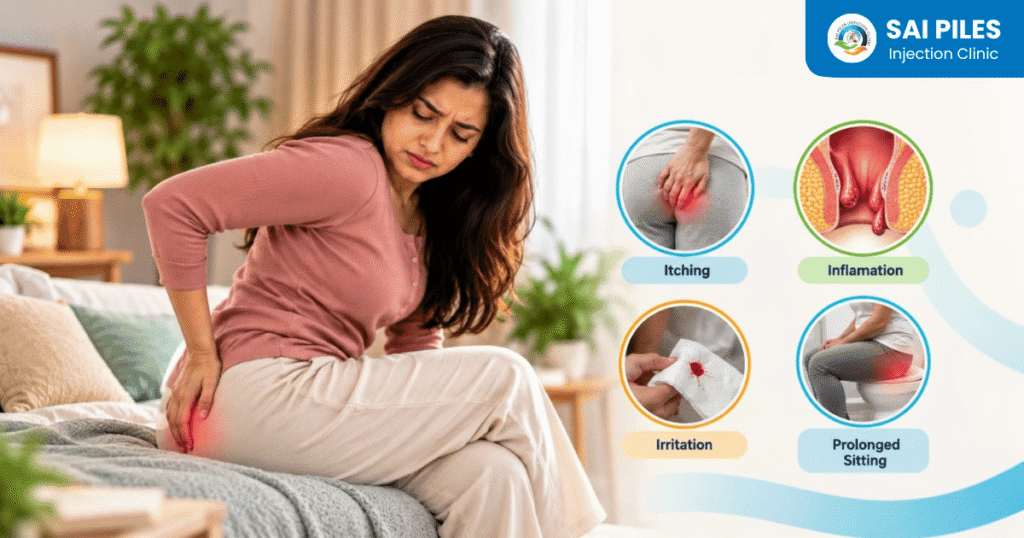
Why Do Piles Cause Itching?
When dealing with hemorrhoids, discomfort can take many forms. Can piles cause itchhing? Yes, this is one of the most common and frustrating symptoms people experience.
Hemorrhoids are swollen blood vessels located in and around the lower rectum and anus. When these blood vessels become inflamed, swollen, or prolapsed, they can irritate the sensitive surrounding skin. Additionally, mucus leakage from internal hemorrhoids often traps moisture and fecal residue in the anal area, leading to persistent irritation, dampness, and an intense urge to scratch.
Why Can Piles Cause Itching?
Piles, also known as hemorrhoids, are swollen veins that develop around the anus or inside the lower rectum.
External piles form beneath the skin around the anus and may cause symptoms such as:
Itching
Irritation
Swelling
Pain
Discomfort
Itching may occur when the surrounding anal skin becomes irritated. This can happen when mucus or small amounts of stool come into contact with sensitive skin.
Irritation can also result from excessive wiping, rubbing the anal area, or cleaning the area too frequently.
This can create a cycle:
Irritation → Itching → Scratching → More Irritation
Avoiding excessive wiping and scratching can help prevent further irritation of the sensitive skin around the anus. Understanding can piles cause itching starts with knowing how swollen hemorrhoids can irritate the sensitive skin around the anus.
What Does Piles-Related Itching Feel Like?
Itching caused by piles can present in different ways depending on the individual. For some, it is a mild, persistent tickle or irritation, while for others, it manifests as a sharp, burning sensation particularly after a bowel movement or during prolonged periods of sitting.
Understanding how hemorrhoids trigger discomfort can help you manage your daily routine more comfortably. If your symptoms persist or worsen, it is always best to consult a healthcare professional for an accurate diagnosis.
Can Swelling Make the Itching Worse?
Yes, swelling around the anus can contribute to irritation and discomfort.
External hemorrhoids can cause swelling and itching in the anal region, which may become more uncomfortable with repeated rubbing or scratching. In some cases, a lump may also be noticeable around the anus.
However, swelling around the anus does not necessarily mean that you have piles. Several other conditions and types of irritation can cause similar symptoms. If the swelling persists, worsens, or is accompanied by significant pain, consult a doctor for proper evaluation.
What Else Can Cause Itching Around the Anus?
Hemorrhoids are not the only possible cause of anal itching. If you are wondering whether piles are truly the culprit, it is important to consider other common triggers that present with identical symptoms:
Infections: Yeast infections, pinworms, or sexually transmitted infections.
Skin Conditions: Contact dermatitis or eczema triggered by harsh soaps, scented wipes, or laundry detergents.
Digestive Issues: Frequent diarrhea or chronic moisture from fecal leakage.
Hygiene Factors: Over-cleaning or scrubbing the delicate anal area too harshly.
What Can You Do for Itching at Home?
If the itching is mild, there are several things you can do to help soothe it.
Keep the area clean: Keep the anal area clean, but avoid excessive cleaning. After a bowel movement, gently clean the area using gentle motions. Avoid scrubbing or wiping back and forth, as this can irritate the sensitive skin and worsen itching. Keep the area as dry as possible.
Avoid scratching the area: Although scratching may provide temporary relief, it can further irritate the sensitive skin around the anus and make itching worse.
If you find yourself scratching frequently, try to avoid it and keep your fingernails short to reduce the risk of further irritation or skin damage.
Prevent constipation: Constipation and straining during bowel movements can contribute to hemorrhoids, so getting enough fiber is important.
Fiber can help soften stools, make them easier to pass, and support regular bowel movements. This can reduce the need to strain.
Good sources of fiber include:
Fruits
Vegetables
Whole grains
Beans and lentils
Other high-fiber foods
– Avoid sitting on the toilet for too long: Sitting on the toilet for extended periods can put additional pressure on the anal area.
Try to use the toilet only when you need to have a bowel movement and avoid staying longer than necessary.
If you are asking can piles cause itching, simple home measures may help when the itching is related to mild hemorrhoid irritation.
How to Relieve Piles Itching at Home?
For initial stage hemorrhoids, home care may help relieve symptoms such as itching, swelling, and discomfort. If you are wondering whether can piles cause itching, proper home measures can provide significant relief.
Some home measures include:
Eating a high-fiber diet
Drinking enough fluids
Avoiding straining during bowel movements
Avoiding prolonged sitting or standing
Keeping the anal area clean and dry
Taking a warm bath or sitz bath
Over-the-counter hemorrhoid creams and ointments may also provide temporary relief from minor itching and swelling. However, these treatments should be used according to the product instructions, and you should consult a healthcare professional if your symptoms persist or worsen.
Home remedies can help relieve some uncomfortable symptoms associated with hemorrhoids, but they cannot determine the underlying cause of anal itching. If itching is persistent, recurring, or accompanied by other unusual symptoms, seek medical advice for proper evaluation
How Long Do Home Remedies Take to Help Piles?
The time it takes for home remedies to help can vary significantly depending on the severity and underlying cause of your hemorrhoids.
Some people may find that simple measures aimed at reducing discomfort and minimizing strain on the anal region are enough to improve their symptoms.
However, home treatment should not be used as a reason to ignore symptoms that persist, worsen, or keep coming back. If your symptoms do not improve or continue to recur, speak with a doctor for appropriate evaluation and treatment.
When Should You See a Doctor?
You should consult a doctor if:
The itching is severe or persistent
The itching keeps coming back
You experience bleeding from the anus
You notice a painful or swollen lump
You experience significant pain
Your symptoms have not improved significantly after about a week of home treatment
You are unsure what is causing the itching
If you experience severe anal pain along with rectal bleeding, particularly if you also have fever, diarrhea, or abdominal pain, seek medical attention promptly.
Note: Rectal bleeding should not automatically be attributed to piles, as several other conditions can cause rectal bleeding. If you are still wondering can piles cause itching, persistent or severe itching should not automatically be blamed on hemorrhoids.
Conclusion: Can Piles Cause Itching?
Yes, piles can cause itching, particularly when external hemorrhoids irritate the surrounding skin.
However, anal itching is not always caused by piles. Other conditions, such as skin irritation, infections, diarrhea, or other anal and bowel problems, can also cause itching.
If piles are contributing to the itching, simple measures may help provide relief. These include keeping the anal area clean and dry, avoiding scratching, eating a high-fiber diet, staying well hydrated, and avoiding straining during bowel movements.
If the itching persists or is accompanied by concerning symptoms such as bleeding, significant swelling, or pain, consult a doctor for proper evaluation.
Persistent itching should not be ignored. Identifying the underlying cause can help ensure that you receive the appropriate treatment.
For more information about hemorrhoid symptoms, causes, and treatment, visit the National Institute of Diabetes and Digestive and Kidney Diseases (NIDDK) .
Frequently Asked Questions
Yes, piles can cause itchhing, particularly when external hemorrhoids swell or develop tiny blood clots (thrombosis), causing skin irritation and inflammation around the anal opening.
No. Itching around the anus can also be caused by skin irritation, infections, diarrhea, anal fissures, excessive sweating, or other anal and bowel conditions.
Constipation can lead to straining during bowel movements, which may contribute to hemorrhoids and make symptoms more uncomfortable
Keeping the anal area clean and dry, avoiding scratching, eating enough fiber, drinking sufficient fluids, and avoiding straining during bowel movements may help reduce irritation and discomfort.
You should see a doctor if the itching is severe, persistent, keeps coming back, or does not improve with home care. Medical advice is also recommended if itching is accompanied by bleeding, significant pain, or a painful or swollen lump.
No. Treatment depends entirely on the underlying cause. If the itching is driven by skin irritation, hygiene changes, or minor infections, addressing those specific triggers will resolve the issue without needing specialized hemorrhoid treatments.
Get Professional Relief Today
Continuous anal itching or discomfort shouldn’t be ignored. At Sai Piles Injection Clinic, we offer safe, non-surgical, 100% Ayurvedic treatment options tailored to your condition.