
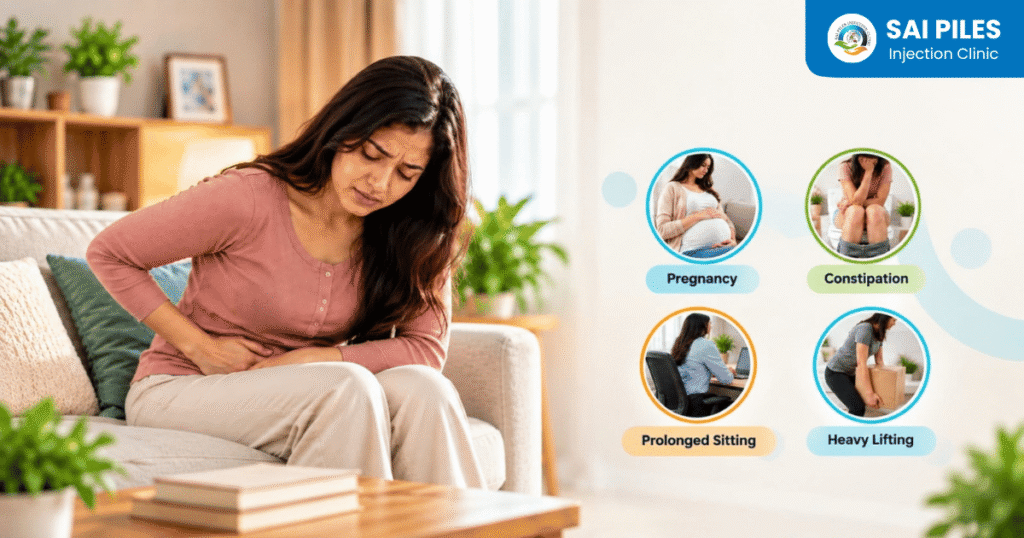
Piles can affect anyone, including women. They can be uncomfortable, irritating, and sometimes painful.
There are several factors that can contribute to the development of piles, including constipation, straining during bowel movements, prolonged sitting, a low-fiber diet, pregnancy, and other factors.
Understanding the causes of piles in women can help you identify potential triggers and make simple lifestyle changes that may reduce the risk of developing this uncomfortable condition.
What Are Piles?
Piles, sometimes referred to as hemorrhoids, are swollen and inflamed veins located around the anus or in the lower rectum.
There are two main types of piles:
Internal hemorrhoids: These occur inside the anal canal or lower rectum.
External hemorrhoids: These develop under the skin around the anal region.
Depending on the type and severity of hemorrhoids, you may experience symptoms such as:
Itching around the anus
Pain or discomfort
Swelling
A lump near the anus
Bleeding from the anus during or after bowel movements
Not everyone with hemorrhoids experiences the same symptoms. Some people may have mild symptoms, while others may experience more noticeable discomfort.
What Are the Common Causes of Piles in Women?
While there is often no single underlying cause, piles generally develop when increased pressure is placed on the veins around the anus and lower rectum.
Some common causes and risk factors for piles include:
Constipation
Straining during bowel movements
Prolonged sitting
Sitting on the toilet for extended periods
A low-fiber diet
Lifting heavy weights
Being overweight
Chronic diarrhea
Family history
Aging
These factors can increase pressure on the veins around the anus, which may contribute to swelling and the development of piles.
How Does Constipation and Piles Connect?
Constipation is one of the most common factors associated with piles.
When you are constipated, stools tend to become hard and difficult to pass, which may cause you to strain during bowel movements. Constipation is one of the common causes of piles in women, especially when hard stools lead to repeated straining.
Straining can increase pressure on the veins around the anus and lower rectum, which may contribute to the development or worsening of hemorrhoids.
If you experience frequent constipation, repeated straining during bowel movements may increase your risk of developing hemorrhoids. Managing constipation through a high-fiber diet, adequate fluid intake, regular physical activity, and healthy bowel habits can help reduce this risk.
What to Do for Constipation
There are several things you can do to help prevent or manage constipation. These include:
Eating more fiber-rich foods
Drinking enough water and other fluids
Eating a variety of vegetables and fruits
Choosing whole-grain foods
Getting regular physical activity
Avoiding delaying or ignoring the urge to have a bowel movement
Eating enough fiber regularly can help soften stools and make them easier to pass. This may reduce the need to strain during bowel movements and can help lower the risk of hemorrhoid symptoms.
Can Pregnancy Cause Piles?
Pregnancy is a common risk factor for developing hemorrhoids.
As the fetus grows, increased pressure on the veins in the pelvic and anal region can contribute to swelling of the hemorrhoidal veins.
Constipation is also common during pregnancy and may lead to increased straining during bowel movements, which can further contribute to hemorrhoid symptoms.
As a result, some women may experience hemorrhoids for the first time during pregnancy.
Does Sitting Too Long Cause Piles?
Another contributing factor may be prolonged sitting.
If your job requires you to sit for several hours at a time, prolonged sitting may contribute to hemorrhoid symptoms. Sitting on the toilet for extended periods may also increase pressure around the anal region.
If your work requires you to sit for long periods, try to take regular breaks to stand up and walk around for a few minutes. Even simple movements, such as standing and stretching your legs, can help. You do not need to engage in intensive exercise during these breaks.
Prolonged sitting can also be a key lifestyle trigger for developing hemorrhoids.
Can Heavy Lifting Lead to Piles?
Heavy lifting can increase pressure in the lower body, particularly when you hold your breath or strain during the activity.
Regular heavy lifting and certain types of weight training may be associated with an increased risk of hemorrhoid symptoms. However, this does not mean that you have to stop exercising altogether.
What matters is using proper lifting techniques, avoiding unnecessary strain, and listening to your body, especially if you already experience piles or hemorrhoid symptoms.
Can a Low-Fiber Diet Increase the Risk?
Your diet can also play a role in the development of piles.
A low-fiber diet can make stools harder and more difficult to pass, which may contribute to constipation and straining during bowel movements. This is a primary risk factor for hemorrhoids in women.
Try gradually increasing your intake of fiber-rich foods, such as:
Fruits
Vegetables
Whole grains
Beans
Lentils
Other high-fiber foods
Increase your fiber intake gradually to help prevent bloating and discomfort. It is also important to drink enough fluids to support healthy bowel movements and help keep stools soft.
Can Lack of Exercise Contribute to Piles?
Regular physical activity can help support normal bowel function and reduce the risk of constipation.
You do not need to engage in intense workouts. Simple activities performed regularly can be beneficial, such as:
Walking
Jogging
Cycling
Swimming
Gentle stretching
Regular exercise can also help you maintain a healthy weight, which may help reduce pressure on the abdomen and support overall bowel health.
What Exercise Is Good for Piles?
If you already have piles, it’s essential to choose exercises that won’t aggravate the condition.
Walking is a good example of a low-impact activity that most people can do with minimal strain. Regular physical activity can help keep your body active and support healthy bowel movements.
However, if a particular activity makes your hemorrhoid symptoms worse, stop the activity and speak with a doctor for guidance.
Other Risk Factors You Should Know
Some risk factors for piles are beyond your control.
Family history: Some people may be more likely to develop hemorrhoids if they have a family history of the condition.
Age: As you age, the tissues that support the veins around the anus and lower rectum can weaken. This may increase the likelihood of developing hemorrhoids.
Being overweight: Being overweight or obese may increase pressure on the veins in the lower rectal region, which can contribute to the development of piles.
Diarrhea: Piles are commonly associated with constipation, but chronic diarrhea can also contribute to irritation and may increase the risk of hemorrhoid symptoms.
Being aware of these uncontrollable risk factors helps in early recognition and proactive management.
What Piles Symptoms Should You Watch For?
Being aware of the common signs and symptoms of piles can help you recognize the condition and seek appropriate medical advice when needed.
Some common symptoms include:
Bleeding: Bright red blood may appear on toilet paper, in the toilet bowl, or on the surface of the stool. Although rectal bleeding can occur with piles, it can also have other causes.
Itching: Itching in or around the anal region.
Pain or discomfort: This may occur around the anus, particularly with external hemorrhoids.
Swelling or a lump: A swollen area or small lump may develop near the anus.
Irritation: A feeling of discomfort or irritation around the anal region.
External hemorrhoids are more likely to cause symptoms such as swelling, itching, and pain. Internal hemorrhoids are more commonly associated with bleeding and may sometimes protrude through the anus.
However, other medical conditions can cause similar symptoms. Therefore, do not automatically assume that blood in your stool is caused by piles. If you experience rectal bleeding, persistent symptoms, or unusual changes, consult a doctor for proper evaluation and appropriate treatment.
How Can You Reduce Your Risk of Piles?
You cannot control all the risk factors for piles, but you can modify some of them through your daily habits. To help reduce your risk, make sure to:
Eat enough fiber
Stay well hydrated
Avoid straining during bowel movements
Limit the amount of time you spend on the toilet
Stay physically active
Avoid lifting excessively heavy objects if they cause significant strain
Maintaining a healthy weight and addressing constipation instead of ignoring it can also support your overall health and help reduce factors that may contribute to piles.
When Should You See a Doctor?
Mild cases of piles can often be managed by making changes to your diet and bowel habits. However, you should seek medical advice if:
Bleeding persists or keeps coming back
You experience severe pain
A lump near the anus is very painful
Symptoms do not improve with home treatment
Symptoms continue to recur
You are uncertain about what is causing your symptoms
Prompt medical attention is recommended if you experience severe anal pain accompanied by rectal bleeding, particularly if you also have abdominal pain, diarrhea, or fever.
For more information about hemorrhoids, their causes, symptoms, and treatment, you can also refer to the National Institute of Diabetes and Digestive and Kidney Diseases (NIDDK) .
Conclusion
Knowing the causes of piles in women can help you make practical changes to reduce avoidable risk factors.
The causes of piles in women can include both daily habits and factors that are beyond a person’s control.
Constipation, straining during bowel movements, a low-fiber diet, pregnancy, prolonged sitting, being overweight or obese, chronic diarrhea, heavy lifting, and aging can all contribute to the development of piles.
Fortunately, many lifestyle factors associated with hemorrhoids can be modified. Eating more fiber-rich foods, staying well hydrated, exercising regularly, avoiding straining during bowel movements, and limiting the time spent on the toilet may help reduce the risk of developing hemorrhoids.
Frequently Asked Questions
Yes. A woman can experience piles for the first time during pregnancy. As the fetus grows, increased pressure on the veins in the pelvic and anal region may contribute to hemorrhoids. Constipation and straining during bowel movements can also increase the risk.
Pregnancy-related piles may improve as factors such as increased pressure, constipation, and straining decrease after pregnancy. However, if symptoms persist or return, it is important to consult a doctor.
No. While piles are a common cause of rectal bleeding, blood in the stool can also indicate other conditions like anal fissures, polyps, or digestive tract issues. You should always consult a medical professional for a proper diagnosis.
Book a Confidential Consultation
Expecting or experiencing discomfort? Don’t let hemorrhoid pain disrupt your journey. Book a safe, personalized consultation with our team today.