
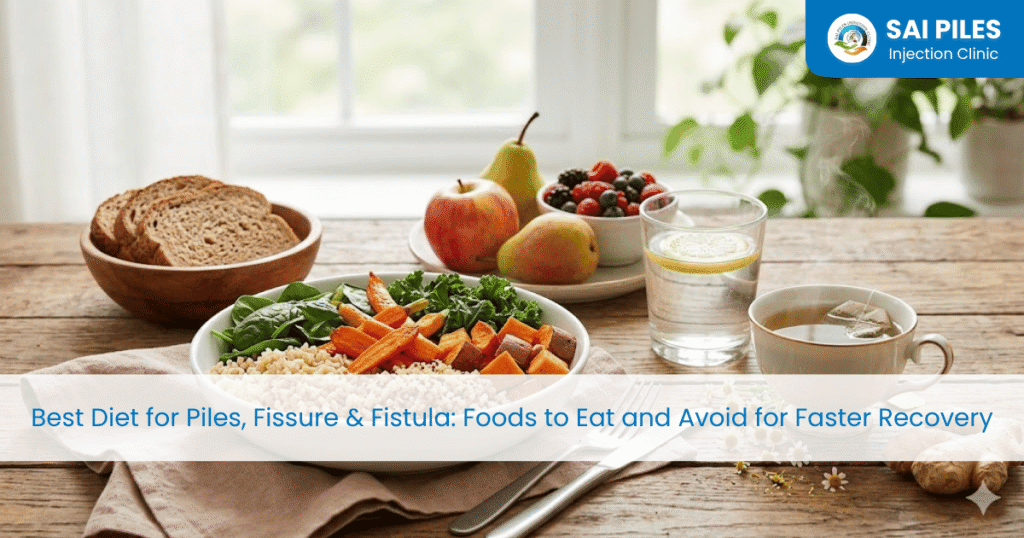
Whether you are managing piles, healing from a fissure, or recovering after fistula treatment, one thing holds constant: what you eat directly affects your recovery. Diet is not a cure by itself, but it is the foundation without which even the best medical treatment will struggle to hold.
This guide gives you a complete, practical dietary roadmap — grounded in what actually works — for all three anorectal conditions.
Why Diet Matters So Much for Anorectal Conditions
All three conditions — piles, fissures, and fistulas — are made worse by constipation, hard stools, and straining. The common thread is increased pressure on the anal and rectal region during bowel movements. The right diet reduces this pressure dramatically by:
- Softening stools so they pass easily without straining
- Reducing intestinal transit time so the stool does not dry out in the colon
- Reducing inflammation in the gut and rectal tissue
- Supporting the immune system for faster wound healing
Foods to Include: What to Eat for Piles, Fissure, and Fistula
Apart from our 100% ayurvedic injection therapy, the next very important factor is the food you eat. The combination of these two will give you permanent relief from the disease.
High-Fibre Foods — Your Most Important Ally
Dietary fibre is the single most important nutritional factor in managing all three conditions. It absorbs water and forms a soft, bulky stool that passes with minimal effort.
Best sources:
- Fruits: Papaya, muskmelon, watermelon, sapota(chiku), guava, Anjeer
- Vegetables: Spinach, methi (fenugreek), bottle gourd (lauki), ridge gourd (turai), carrot, beetroot, and sweet potato
- Whole grains: Brown rice, whole wheat roti, oats, daliya (broken wheat), and barley
- Legumes: Dal (all varieties), rajma, chana, and moong
- Triphala churan: One teaspoon in warm water before bed is highly effective for preventing constipation
Target: 25 to 35 grams of dietary fibre daily.
Water and Hydrating Fluids
Fibre only works when there is enough water for it to absorb. Without adequate hydration, a high-fibre diet can actually make constipation worse.
- Drink 8 to 10 glasses (2 to 2.5 litres) of plain water daily
- Coconut water, buttermilk (chaas), and diluted fruit juices are excellent additions
- Begin your morning with a glass of warm water — it stimulates the gut and makes the morning bowel movement easier
Probiotic Foods
A healthy gut microbiome supports regular, smooth bowel movements and reduces inflammation.
- Curd (dahi) — have at least one serving daily
- Homemade buttermilk — especially after lunch
- Kanji
Anti-Inflammatory Foods
For fissures and fistulas especially, reducing tissue inflammation supports faster healing.
- Turmeric (haldi) — add to dal, curries, or warm milk
- Ginger — in tea or cooking
- Garlic — a natural antimicrobial
- Flaxseeds (alsi) — a small spoonful daily adds fibre and omega-3 fatty acids
Foods to Avoid: What Makes Piles, Fissure, and Fistula Worse
Spicy Foods
Spicy food irritates the lining of the intestines and the anal canal. It can trigger inflammation, worsen itching and burning in patients with piles, and significantly aggravate the pain of an anal fissure. Avoid chillies, hot sauces, and excessive masala, especially during a flare-up.
Refined and Processed Foods
White bread, maida-based products (biscuits, namkeen, samosas), instant noodles, and packaged snacks contain almost no fibre and are among the leading contributors to chronic constipation.
Fermented Food
It is easy to digest, but creates an acidity problem. And also bad for gut health.
Alcohol
Alcohol is a diuretic — it causes the body to lose water, which hardens stools. It also irritates the gastrointestinal lining and impairs healing. Avoid entirely during active symptoms and recovery.
Caffeinated Beverages
Excess tea and coffee dehydrate the body and can trigger loose stools in some people, which aggravates fissures. Limit to one cup per day and ensure you compensate with extra water.
Dairy in Excess
Full-fat dairy — especially large amounts of paneer, cheese, or cream — can slow bowel motility and contribute to constipation. Curd and buttermilk are the exceptions and are actively beneficial.
A Sample Daily Diet Plan for Piles / Fissure / Fistula Patients
- Early morning: 1 glass of warm water + 1 tsp isabgol in warm water
- Breakfast: Oats porridge with banana / Vegetable poha
- Mid-morning: 1 fruit — papaya, guava, or apple with skin
- Lunch: 2 whole wheat rotis + dal + sabzi (preferably bottle gourd or spinach) + curd
- Afternoon: Buttermilk/coconut water
- Evening snack: Boiled chana/a small handful of soaked flaxseeds
- Dinner: Brown rice or khichdi + light vegetable curry
- Bedtime: 1 glass of warm water with 1 tsp triphala churan(if needed)
Dietary Tips Specifically for Post-Treatment Recovery
If you have recently undergone injection therapy for piles, fissure treatment, or fistula:
- Avoid straining at all costs — use a stool softener if your doctor recommends
- Keep fibre intake consistent even after symptoms improve
- Avoid prolonged sitting, especially during recovery
- Follow up with your doctor as scheduled, even if you are feeling better
Frequently Asked Questions
Diet can resolve very mild, early-stage piles and prevent progression. For Grade II and above, dietary changes are essential support — but they need to be combined with medical treatment for effective results.
Not necessarily. Eggs, chicken, and mutton are also acceptable in moderate quantities. Red meat can also be taken in normal quantities.
One teaspoon (5 grams) in a full glass of warm water, taken at bedtime, is a standard and safe starting dose. Drink plenty of water throughout the day when using isabgol/triphala, or it may worsen constipation.
Yes — but prefer brown rice over white rice, as it retains its fibre content. White rice is low in fibre and contributes to constipation with regular consumption.
At least until your symptoms are fully resolved, and then maintained as a lifestyle habit. Constipation is a chronic condition for many people, and the diet that prevents it needs to be sustained.
Permanent Relief is Possible
Diet is your first line of defence — and your best tool for long-term prevention. If symptoms persist despite dietary changes, the team at Sai Piles Injection Clinic is here to help. Book a consultation today and get a personalised treatment plan.