
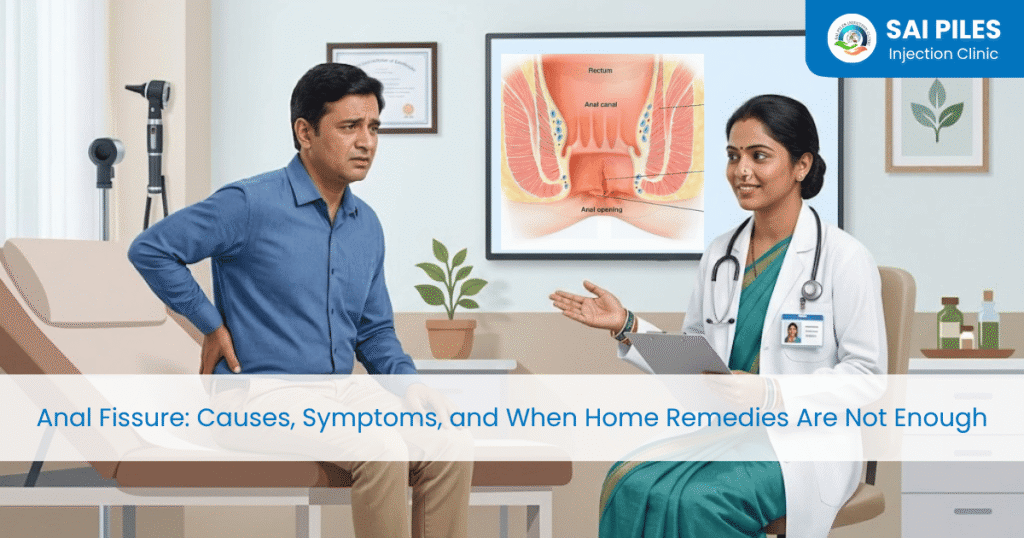
If passing stool has become something you genuinely dread — because of a burning, tearing pain that can last for an hour or more afterward — there is a very good chance you are dealing with an anal fissure.
An anal fissure is one of the most painful anorectal conditions, yet it is also among the most treatable when approached correctly. This guide explains exactly what a fissure is, what makes it worse, and the full range of treatment options available — from home care to medical procedures.
What Is an Anal Fissure?
An anal fissure is a small tear or cut in the thin, moist tissue lining the anal canal. The anal canal is only about 4 to 5 centimetres long, but it is rich in pain-sensing nerve fibres — which is why even a tiny tear causes disproportionately severe pain.
Fissures are classified as:
- Acute fissures: Recently developed, often triggered by a specific episode of hard stool or constipation. These have a good chance of healing on their own with proper care.
- Chronic fissures: Those that persist for more than 8 weeks. Chronic fissures often develop a skin tag at the outer edge (sentinel pile) and may penetrate deeper into the anal sphincter muscle, requiring medical treatment.
What Causes an Anal Fissure?
The most common trigger is the passage of a hard, large stool that stretches the anal canal beyond its comfortable capacity. Other contributing factors include:
- Chronic constipation — straining repeatedly tears the delicate lining
- Frequent or persistent diarrhoea, which irritates and weakens the lining
- Childbirth — particularly vaginal delivery, which places intense pressure on the perineal region
- Low blood flow to the posterior midline of the anal canal (the most common location for fissures)
- Inflammatory bowel conditions such as Crohn’s disease
- Spasm of the internal anal sphincter, which reduces blood supply and delays healing
Recognising the Symptoms
The symptoms of an anal fissure are usually quite distinctive:
- Severe, sharp pain during and immediately after a bowel movement — often described as burning or cutting
- Pain that lingers for 30 minutes to several hours after passing stool
- A small amount of bright red blood on toilet paper or the stool surface
- Visible crack or tear in the skin near the anus
- Itching or discomfort in the area between bowel movements
- A small, hard skin tag near the fissure in chronic cases
Many patients begin to avoid going to the toilet due to the anticipated pain, which leads to harder stools and makes the fissure worse — a vicious cycle that needs to be broken.
Home Remedies That Help with Anal Fissures
For acute fissures, a combination of the following measures can support healing:
Dietary Fibre and Hydration
Softening the stool is the primary goal. Eat plenty of fibre-rich foods — fruits, vegetables, oats, and lentils — and drink a minimum of 8 to 10 glasses of water per day. Isabgol (psyllium husk) is a simple and affordable supplement that works well for this purpose.
Sitz Baths
Soaking the anal area in warm water for 15 to 20 minutes, two or three times a day, relaxes the sphincter muscle and reduces swelling and pain. A sitz bath tub is available at most pharmacies, or a clean bucket of warm water works equally well.
Topical Anaesthetic Creams
Creams containing jaytadi grutham can be applied before and after bowel movements to reduce pain. These are available at pharmacies and provide short-term relief during the healing process.
Stool Softeners
Short-term use of stool softeners can ease the passage of stool while the fissure heals, breaking the pain-avoidance cycle.
When Home Remedies Are Not Enough
If the fissure is still causing significant pain after 4 to 6 weeks of consistent home treatment, or if it has already become chronic, it is time for medical intervention.
Foods and Habits to Avoid
- Spicy foods, which can aggravate the anal lining
- Alcohol, which dehydrates the body and hardens stools
- Prolonged sitting on the toilet
- Ignoring the urge to defecate — this causes the stool to harden further
- Straining — if passing stool requires great effort, seek treatment for constipation first
How Long Does a Fissure Take to Heal?
An acute fissure, with proper home care, can heal within 4 to 8 weeks. A chronic fissure, by definition, has already failed to heal on its own and requires medical treatment.
At Sai Piles Injection Clinic, our 100% Ayurvedic Injection Therapy is a quick injection procedure for the excision of the haemorrhoid. Most patients experience significant relief within a few days and then permanent relief within a few weeks.
This is far more effective — and far less frightening — than people imagine. The procedure takes under 5 minutes, requires no anaesthesia(spinal/general), and you can return home immediately afterward.
Frequently Asked Questions
No. A fissure is a tear in the anal lining, while piles are swollen blood vessels. A fissure causes severe pain; piles are usually painless (unless prolapsed or thrombosed). Both can cause bleeding, but the character of the pain is very different.
Yes, 100%— acute fissures often heal with dietary changes and injection treatments. There are multiple patients who have seen permanent relief after going through our 100% Ayurvedic Injection Therapy.
Recurrent fissures usually indicate ongoing constipation; continuous injury to the anus can lead to a chronic fissure.
Yes, provided it is a cream specifically prescribed for anal fissures. Follow your doctor’s instructions carefully.
Permanent Relief is Possible
Living with fissure pain is not something you have to accept. At Sai Piles Injection Clinic, we offer gentle, ayurvedic injection treatments tailored to your condition. Book a consultation and get the relief you deserve.